Antioch's First Encounter with Latin Missionaries: The Response of Anastasius ibn Mujalla
Tuesday, May 26, 2026
Antioch's First Encounter with Latin Missionaries: The Response of Anastasius ibn Mujalla
Monday, April 27, 2026
Radu Dipratu: The ʿarżuḥāls of Sylvester, Patriarch of Antioch
Radu Dipratu, "The ʿarżuḥāls of Sylvester, Patriarch of Antioch: Negotiating church affairs with the sublime porte in the first half of the 18th Century."
Abstract
While persecutions endured by non-Muslims under the “Turkish yoke” still represent a common trope both in the public perception and in certain academic circles in Orthodox-majority countries today, recent scholarly work has offered more nuanced approaches to the history of the Orthodox Churches under Ottoman rule. Making use of the rich information provided by Ottoman archival sources, this paper examines several unpublished documents from the Ottoman Archives in Istanbul, representing petitions (ʿarżuḥāl ) submitted by Sylvester, the Orthodox Patriarch of Antioch (1724–1766). It is no surprise that an important theme of these petitions concerned the conflict between the Orthodox and Catholic factions in Greater Syria, the latter being recently energised by the election of a separate patriarch in 1724, in the person of Cyril VI, and the establishment of an independent Melkite Greek Catholic Patriarchate. While previous studies have highlighted the crucial help that Sylvester received from the other Orthodox Patriarchs in Istanbul and Jerusalem in having his seat recognised by Ottoman authorities, the ʿarżuḥāls examined in this paper showcase Sylvester’s own agency in negotiating Church affairs with the Porte. Either demanding imperial commands to reinforce his election as patriarch or to prevent Orthodox Christians from converting to Catholicism and imprisoning his rivals, Sylvester made full use of his position in the Ottoman administrative apparatus by using state-sanctioned practices to solve inter-confessional struggles. The paper argues that the Ottoman Empire provided a legal and administrative framework in which Orthodox Churches were not merely compelled to function under duress, but one which they found advantageous and from which they sought legitimisation for their own factional struggles.
Read the entire article here.
Tuesday, December 2, 2025
Habib Ibrahim: The Correspondence of Mūsā Ṭrābulsī (1732-1787)
This new book, free to download in open access here, provides an Arabic edition and English translation of letters written in the circle of Orthodox churchmen and intellectuals around the secretary of the Patriarch Sylvester of Antioch. Taken alongside Mihai Țipău's monograph on Sylvester, published last year and available in open access here, we now have a vastly richer understanding of the life of the Patriarchate of Antioch in the immediate aftermath of the Melkite Schism.
Friday, July 11, 2025
Jad Ganem: The Feast of Martyrdom
The Feast of Martyrdom
The Feast of Saint Joseph of Damascus and his companions comes this year at a moment fraught with pain and hope, as the memory of martyrdom and confession of the faith is renewed in the heart of Damascus, a city that still breathes faith despite its wounds. On June 22, 2025, while the faithful were celebrating the Divine Liturgy in the Church of Mar Elias in Dweilaa, the souls of a number of them were taken up to the face of the Father, their faith crowned with the martyrdom of blood, once more announcing that the Church of Antioch has continued to bear the cross of martyrdom on her shoulders for two thousand year.
In this context, the Feast of Saint Joseph of Damascus, who was martyred in the massacres of 1860, takes on renewed significance. The Church of Antioch, throughout the Middle East, has always been a church of martyrs and confessors. Her soil has been watered with the blood of saints and with the tears and agonies of confessors. Her martyrdoms are not a distant memory, but rather a reality that is repeated, giving life to the Church’s body in every generation. The Orthodox faith came to us in Antioch not through conferences, publications, or lectures, but thanks to thousands of martyrs and confessors who lived out the Gospel to the end.
Today, as Antiochians celebrate Saint Joseph of Damascus and his companions— the location of whose relics the Church does not know, and whose name is still not borne by any church or temple in the diocese of Damascus, despite new churches having been built after the declaration of their sainthood— an urgent appeal is made to the Holy Synod of Antioch not to repeat what has happened with those saints. The martyrs of the Church of Mar Elias in Dweilaa deserve to be inscribed in the Antiochian Synaxarion and to have an annual feast designated for them, on which the Church can start to commemorate their names and seek their intercession. They did not seek martyrdom, but it came to them while they were praying. They became a living offering on the Lord’s altar and they deserve to be honored not only with tears, but also with praise and hope. Moreover, the church in which they were martyred has been sanctified by their blood and it deserves to be consecrated to them and to bear their name as well.
Amidst the grief and the psychological pressure following this heinous crime, it may have escaped the attention of church officials that it is important to designate a common burial site for the martyrs, which will become a site for people to pray and seek blessings, a sign that the Church does not forget her martyrs, but honors their relics just as she honors their souls. Martyrs are not buried like other people who have died and everything that their blood has touched on the territory of the church now deserves to be honored as saints’ relics.
At the current moment, with all its pain and hardship, it is imperative that we do not limit ourselves to the political dimensions of what occurred. Rather, it places before us theological, pastoral and historical responsibilities that the Antiochian Church cannot postpone or ignore. The blood of the martyrs is not only the seed of faith. It is also a call to vigilance, veneration and reorientation by declaring the sainthood of the martyrs of the faith who died throughout the See of Antioch in recent years, whether in the city of Antioch, Mount Lebanon, or Damascus, in order to proclaim that Antioch does not forget her martyrs and she seeks their intercession.
Will the commemoration of June 22, 2025 mark a new page in the Church’s veneration of martyrdom in Antioch? Will the Holy Synod take the initiative to declare a common feast for them? Will the diocese of Damascus take the initiative to consecrate the church in which they were martyred in their name? Perhaps the time has come to recall that martyrdom and apostolicity are two important aspects of holiness in Antioch, no less important than asceticism and monasticism. Just as holiness has flourished in sketes and monasteries, it also continues to flourish in the faces of those who offer their life as an offering of love to Christ and in the martyrdom of those who proclaim the Gospel and bear witness to it with patience and hope amidst suffering and death.
Friday, June 27, 2025
Bishop Romanos Hannat Interviewed in an-Nahar
Arabic original here.
Greek Orthodox Patriarchal Vicar to an-Nahar: It is the duty of the state to protect Christians and I do not take back my words.
Bishop Romanos Hannat, patriarchal vicar of the Greek Orthodox Patriarchate of Antioch and all the East, stated that Syrian Christians want the Syrian state to bear its responsibility for protecting them and to undertake the necessary measures for this, explaining that "we do not want and are not seeking outside reassurances."
Speaking with an-Nahar in Damascus, he said that, "Our hand is always extended to participate with all elements of society to build up Syria, and this has not happened yet."
Here is the text of the discussion:
Sayyidna, are you happy with the results of the investigations being conducted by the Interior Ministry about the suicide bombing that bloodied the Church of Mar Elias?
We have not yet officially seen the investigations that took place and we have not received any report from the Interior Ministry because until now there has not been any communication with them. We have only received the news that is circulating on social media which everyone has seen.
Have you received and guarantees or reassurances that Christians will be protected and be able to worship freely?
In his speech, His Beatitude [Greek Orthodox Patriarch of Antioch and All the East John X Yazigi] pointedly stated in all simplicity that this is the duty of the state. We do not want and are not seeking outside reassurances because we have a state and when we say that the state bears responsibility, it means that we do not want any outside reassurances. Rather, we want the Syrian state to take the necessary measures. As you have heard, the authorities have started taking measures and it may take some time. Therefore, we place all responsibility in the hands of the state to take the necessary measures, without looking to the outside world.
You have said on more than one occasion that "our hand is extended to the government." What response have you received?
When His Beatitude says that our hand is outstretched, he means being ready to cooperate. This applies to all public life, with the aim of working to rebuild Syria, which has suffered greatly and has had enough. Our hand is always extended to participate with all elements of society to build up Syria, and this has not happened yet. Syrian society is not one color, but many-colored. To achieve a beautiful painting, all colors must be included, not just black or white, but this has not happened yet. It requires listening, so that we don't reach a stage where some ask why they have been excluded. I am a Syrian just like the other Syrians. The issue is simple.
Sayyidna, a debate erupted on social media over a talk you had with a delegation from the governorate about the number of children that Christian families have. You were accused of marginalizing Muslim victims and some described Patriarch Yazigi's speech as sectarian and inflammatory. How do you respond?
The patriarch was very clear and very transparent in his speech. His speech was that of a father and not of a politician.
His speech was paternal and patriotic, in all simplicity. Reading the speech in its words, it only has this loving, open meaning, while interpreting the speech is a personal matter.
As for the issue of children, it is very simple. Syrian Christian couples have one or two children. If that child is lost, the family has no one to console them, while the family that has ten children and loses one of them still has nine to console them. I hope that no family, large or small, loses a member. This is the essence of what I said and I do not take it back. My words embody humanity in every sense of the word, but how others interpret the issue is none of my business. I respect the opinions of everyone. Others need to respect our opinion. I was saying this while there were victims on the ground in front of me. I was walking over pieces of flesh and human remains. I lived through it and we picked up human remains with our own hands. We pray that God will have mercy on those martyrs who offered their life for the sake of man, for the sake of Christians throughout the world, and for the sake of every person who desires to live in simplicity, calm and peace. This is what we hope the state will undertake to achieve, and we have full confidence.
What message do you address to Syrians in general and Christians in particular?
I do not wish to address my words to the Christian community. I address my words to Syrians. I only wish to speak as a Syrian person. Every person is free in his belief. Brothers in a single house do not all bear the same name. Each one has his own existence and his own importance. My message is to all Syrians and I speak as a Syrian: let's dispense with particular discourse and let all our discourse be national, for we exist in this country as Syrians. Let us all be brothers. Nations are not built without a national discourse.
Monday, April 28, 2025
Antioch: A Bridge Between Worlds (Online Course)
For more information and to register, click here.
This course covers the history of Orthodox Christianity in the Patriarchate of Antioch.
Although the Church of Antioch was founded by the Apostles and was where “the disciples were first called Christians,” the long history of the Patriarchate of Antioch is less well known than that of other Orthodox Churches. For two thousand years, however, it has persisted in its unique Christian witness in the Middle East and, later, the New World. This course will give an introduction to the life of the Antiochian Church from the time of the Muslim conquest of Syria in the 7th century until today. Particular emphasis will be placed on key figures and saints, the church’s response to Islam, the role of the Arabic language, the interplay between Constantinopolitan influence and local particularity, and how the church met and overcame the many threats to its survival over the course of its history.
This
course will take place every Thursday at 12:00 pm Central from May
8-29, 2025. Each session consists of a live lecture by Dr. Samuel
Noble followed by a Q&A. The course is hosted on the OSI Mighty
Networks platform. During registration you will be prompted to create a
Mighty Networks account (free with purchase of course) if you do not
have one already.
Each session will be recorded and posted on the platform following the live class.
For questions, technical help, or more information, please contact Maggie Wissink at mwissink@saintconstantine.org
SESSION 1 (May 8, 2025): Antioch under Muslim Rule
SESSION 2 (May 15, 2025) : The Byzantine Reconquest
SESSION 3 (May 22, 2025): The Ottoman Era and the Melkite Schism
SESSION 4 (May 29, 2025): From Xenocracy to Revival
Monday, January 13, 2025
How Patriarch John X was Elected in 2012
Yazigi New Patriarch of the Orthodox Church
by Ghassan Rifi in al-Safir, Arabic original here.
The bells of Balamand Monastery rang out to announce the election of the
Metropolitan of Western Europe, John Yazigi as the new Greek Orthodox
patriarch of Antioch and all the East, successor to Saints Peter and
Paul and successor to the departed patriarch Ignatius IV Hazim.
The election of John Yazigi, who is the 158th patriarch of the See of
Antioch and who will bear the name "John X", was a surprise for all the
clergy and laity who were observing it, especially since his name was
not listed among the potential candidates since there had not yet been
five years since his being named metropolitan (it had been 4 years and 8
months) as the canons require. However, "ecclesial economia accompanied
by divine inspiration," according to one of the metropolitans, led the
members of the Holy Synod of Antioch to amend the canon to allow for the
nomination of all metropolitans. This was in order widen the range of
choices and to keep it from being limited to certain people.
It could be said that the "Antiochian coalition" that stretches from
Syria to Lebanon, Palestine, and the Gulf, all the way to Antioch,
comprising the senior metropolitans who are the founders of the Orthodox
Youth Movement and those active in it, put itself in democratic
competition with a coalition of some of the archdioceses of the West and
Syria.
It was clear that the orientation of the "Antiochian coalition" is to
continue along the lines established by the past two patriarchs, Elias
IV and Ignatius IV, who laid the foundation for the revival of the
Orthodox Church. The metropolitans of this coalition chose John X from
outside the list of candidates, since even though he was considered one
of the metropolitans of the West, he simultaneously represents a
meeting-point for all and a common ground between the older and younger
generations of metropolitans. He responds to the desires of the "Church
Current" and the Orthodox Youth Movement, especially since he was raised
in the thought of the late Patriarch Ignatius IV and his colleague
Metropolitan Georges Khodr.
One of the metropolitans says, "The winner in these elections is the
unity of the Orthodox Church and of revivalist thought, especially since
the new patriarch is a son of Lattakia who knows Syria and Lebanon very
well. He is a man of peace and dialog who believes that the Eastern
Orthodox Church stretches from Antioch to the Americas. He is able to
face the difficult circumstances that the Arab region, and especially
Syria, is living through."
How did the new patriarch arrive at the reins of the See of Antioch?
At ten yesterday morning, a meeting of the Antiochian synod met at
Balamand Monastery with the participation of eighteen of twenty
metropolitans, since the metropolitan of North America, Philip Saliba,
and the Metropolitan of Baghdad, Constantine Papastephanou, were absent
on account of illness.
When Metropolitan Elias Audi arrived at the monastery, the doors of
Balamand were shut so that they could be alone for approximately three
hours, during which time no one was allowed to enter. It began with
prayer for the soul of Patriarch Hazim and that "God may inspire the
metropolitans of the See of Antioch to make the right choice."
Then a consultative session began during which the question of holding
the election or delaying it to wait what will happen with the security
situation in Syria was held. However, the overwhelming majority was in
favor of holding it and the possibility of delay was quickly set aside,
so everyone moved on to the process of election.
The election process requries that each metropolitan puts forward the
name of three candidates (he can name himself) and then one of those
three is elected. If he receives two thirds of the vote, he is named the
winner but if he does not, there is an election between him and the
next two candidates. The one who wins a majority is named patriarch.
At the beginning of the electoral session, the metropolitans agreed to
amend the Church canons to. The amendment opened the door for all
metropolitans to be nominated and ended the limitation to only those who
have been metropolitans for more than five years.
In the first round, which was a secret ballot, metropolitans John Yazigi
(Western Europe), Antonios Shadrawi (Mexico), and Saba Esber
(Patriarchal Locum Tenens and metropolitan of Hauran and Jebel el-Arab)
were named.
In the second round of the election, it became clear that if both
metropolitans Yazigi and Esber--both of whom belong to the "Antiochian
coalition", continued in the running, the deciding bloc's votes would be
split between them, which would be in Metropolitan Shadrawi's favor.
For this reason, Metropolitan Esber took the initiative to announce his
withdrawal so that the competition would be limited to Yazigi and
Shadrawi.
After the vote and the count, Yazigi's victory became clear with twelve
votes against five votes for Shadrawi and one vote for Esber.
Immediately, the Synod's secretary, Father Georges Dimas went out and
the election of John Yazigi as the new patriarch of the See of Antioch,
succeeding the departed Patriarch Ignatius Hazim, calling attention to
that the patriarchal departments will take charge of announcing the
formal arrangements for celebrating the installation and his receiving
the shepherd's staff. Throughout this announcement there were bells
ringing, cheers, and applause.
After this the metropolitans, led by Patriarch John X went to the
monastery's church amidst the chanting of the Balamand choir. There he
put on priestly robes and presided over the prayer of thanksgiving. He
gave a sermon in which he stressed that the Gospel, through our prayers,
will remain open, and calling on the fathers to pray so that we might
be as one hand and so that we may make the Church of Antioch the image
that befits the Bride of Christ and the Church. He said, "We realize
that our people are good and that serving them is sweet for our hearts.
We are from this land, from this country. Our country, our soil, is a
part of us and we are a part of it."
He closed by stressing unity and cooperation for the sake of service. He
thanked the metropolitans for their trust, confirming his tireless
quest to build up a church that is a beautiful bride for all. Then
Patriarch Yazigi went to the Institute of Theology. The first to
congratulate him was the former vice president Issam Fares who called
him from abroad. Brigadier General William Majli also sent his
congratulations, as did the president of Balamand University, Doctor
Elie Salem and a number of the university's deans. The deputy Robert
Fadel was present and said that Yazigi "enjoys the qualities of youth,
knowledge, culture, piety, and openness" and that half of him is
Lebanese and half Syrian, noting that these qualities are not easily
found.
For his part, the patriarch locum tenens Saba Esber told al-Saifr, "The
election process was carried out in peace and love and was exceptionally
smooth."
Esber thought that the media burdened the election process with more
than it could bear. This provoked great buzz around it, but he denied
that any political struggle took place and affirmed that the election
process was carried out in all responsibility.
The Orthodox Church Renews Her Youth: Yazigi is Patriarch
by Ghassan Saoud in al-Akhbar, Arabic original here.
"Yesterday the Holy Spirit chose the metropolitan of Europe, John Yazigi
(born 1955) as patriarch of the Orthodox Church of Antioch." If some of
the metropolitans were occupied with prayer instead of their electoral
campaigns, they might have heard the voice of Holy Spirit encouraging
them to withdraw in favor of Yazigi rather than persist in their
candidacy, lest the Holy Spirit dash their hopes by preferring someone
else. The day before yesterday, Patriarch John Yazigi dined at the table
of the metropolitan of Mexico, Antonios Shadrawi. He heard him speak of
his nomination and his plans for the Church in the event that he wins,
within him reciprocating the disclosure of his intentions or what awaits
him. Thus Shadrawi went to bed a patriarch, without his calculations
requiring too much prayer of him. The metropolitans woke with the
assumption that there were two competing groups: one with six votes
nominating the metropolitan of Hauran Saba Esber, the other with six
votes nominating Shadrawi, with the probability of Shadrawi's influence
among the six remaining metropolitans.
However, the meeting had barely begun before "the Holy Spirit" began to
be active among the two groups, as Church sources prefer to say. The
patron of Esber's candidacy proposed that the Synod amend the basic
statute of the See of Antioch that was issued in 1973, in order to
permit the nomination of metropolitans who have not yet had dioceses for
five years. Thus it became possible to nominate Metropolitan John
Yazigi, who was elected metropolitan in 2008. This is with knowledge
that yesterday's amendment, like other previous amendments, have been a
point of canonical discussion between members of the Orthodox Church.
Shadrawi's initial surprise was soon followed by an additional surprise,
as some of the metropolitans whom he considered to be on his side moved
over to Yazigi's side.
Thus the metropolitan of Hauran Saba Esber, the metropolitan of Mexico
Antonios Shadrawi, and the metropolitan of Central and Western Europe
John Yazigi led the first election that names the three candidates for
patriarch. With Saba attracting most of the block in favor of him to
Yazigi, the latter was able to gain the support of a number of
metropolitans who had voted for Shadrawi, the most important of them the
new patriarch's brother, the metropolitan of Aleppo Paul Yazigi who
had previously withdrawn his nomination in favor of Shadrawi, the
metropolitan of Argentina Siluan Muci, his friend bishop Ghattas Hazim,
and his spiritual father Metropolitan John Mansour, who had ordained him
deacon in 1979 and priest in 1983 in the Archdiocese of Lattakia.
The first group, whose announced candidate was Esber and whose leader
was Metropolitan Georges Khodr, first by amending the canon and then by
nominating Yazigi, attracted four votes that were considered to be
closer to the other bloc. If the other group had realized what lay in
wait for them, they would have first blocked the canonical amendment and
then would have nominated Metropolitan Paul Yazigi, who, until his
withdrawal in favor of Shadrawi, was one of the most prominent
candidates opposing Esber. Thus the Orthodox Church would have witnessed
an unprecedented competition between two brothers for the See of
Antioch. Thus it might be said that Shadrawi and his bloc were fooled
when they thought that Esber was Metropolitan Georges Khodr's only
choice. His calculations, and those of Paul Yazigi, were on this basis.
Regardless of the exact electoral figures and who voted for whom, the
Metropolitan of Mount Lebanon has been successful for the second
consecutive time in bringing forward a patriarch whom the Orthodox Youth
Movement can claim as an alumnus.
The new patriarch is a monk who has been living in a tiny apartment in
the French capital for four years because his metropolitan office was
not yet built. Finally, he rented a Church in order to perform the
Orthodox liturgy in it. In his first words as patriarch, the graduate of
Greek theological institutes and abbot of the Patriarchal Monastery of
Our Lady of Balamand from 2001 to 2005 affirmed that, "Christians are
staying in Syria. The land is their land. He called for dialog in order
to solve the crises. Those who know the former bishop of Wadi al-Nasara
say that his political positions will not go beyond the low ceiling that
Patriarch Hazim set for his positions and that generally he will be
content to give fatherly advice to those fighting to love each other a
little more, preferring prayer, fasting, chant, and religious books to
everything else.
On the website of the Archdiocese of Argentina, there is a
slightly different account of how the statute was modified to allow for
the election of Patriarch John. Spanish original, here.
At the beginning of the meeting, the Holy Fathers opened the question of
the list of candidates and decided to include in it Metropolitans John
(Europe) and Basilios (Akkar) who each have 4 years and 7 months of
ministry [as metropolitans], thus making them eligible for the See of
Antioch.
Met. George Khodr's Two Tears
As Patriarch John X was elevated upon the throne at Our Lady of
Balamand, presiding over the prayers of thanksgiving after his election
to the See of Antioch, the "architect" of the Orthodox Church,
Metropolitan Georges Khodr, let two tears stream from his eyes.
The
first tear was for his life-long friend, Ignatius IV Hazim. Yesterday,
Khodr realized that he had departed for good and that he had lost
someone very dear, with whom he had worked over the decades to construct
an Orthodox revival that produced vibrant institutions like Balamand
University and with whom he fought to preserve the unity of the Church
and to open her to dialogue with other religions.
The second tear
was a tear of joy and confidence in the "right-believing" Church, who
entrusted the reins of her authority to one of the pupils who drew from
his well and from the well of his life-long friend Ignatius IV, and who
grew up on the sound thinking of the Orthodox Fathers.
Georges
Khodr seemed satisfied, yesterday, at the election of John Yazigi as
patriarch, because with him and through him is ensured the future of the
Orthodox Church, from Antioch to all the corners of the earth. He
expressed to al-Safir his great longing for Patriarch Hazim and his
overwhelming joy for the one who, with his faith and profound
spirituality, is able to guide the path of the Orthodox Church to a safe
harbor. Khodr states that, "In our canons and our theology, there is no
continuation to the program from one patriarch to another. Each
patriarch has his own program and his own administrative style, within
the one faith."
Saturday, December 21, 2024
Asad Rustom on the Patriarch Sylvester
Translated from: Asad Rustum, Kanisat Madinat Allah Antakya al-'Uzma [The Church of the Great City of God Antioch], Jounieh: Editions St. Paul (1988), vol. 3, pp. 143-151
While Rustom's account is the most common modern Orthodox treatment of Sylvester's election and career, much research has been done since his wrote it. For the most detailed and up-to-date study of Sylvester, see Mihai Țipău's new book, available free for download here. For Rustom's account of Sylvester's Catholic rival Seraphim/Cyril Tanas, see here.
Sylvester I (1724-1766): Before his death, Athanasius indicated to the Christians in Aleppo to elect as his successor a Cypriot priest called Sylvester, who had first served with him as a deacon and accompanied him on many of his travels to Wallachia, Moldavia and elsewhere, and then left him and enrolled in the clergy of the Church of Constantinople. At that time, Sylvester was living on Mount Athos, practicing asceticism.
Cyril Tanas wrote to the Christians who stood firm in the Orthodox faith to attract them to himself. He also wrote to the bishops of the See of Antioch informing them that he had been installed as their patriarch. He asked them to recognize him, submit to him, and commemorate him, threatening those who resist him with deposition, but the bishops did not respond. Before his letters reached them, they and the laity had written to the Holy Synod of Constantinople, presided over by Patriarch Paisius, informing them about the death of the Patriarch Athanasius and about the activities of Cyril Tanas, the way in which he had been consecrated, and his forcible entry into and occupation of the patriarch's residence in Damascus. They asked the synod for fraternal help on account of its moral influence with the Ottoman state, informing them that they had elected Sylvester as patriarch and that they wished for him to be recalled from Mount Athos and be consecrated as a bishop so that he could occupy the Apostolic See of Antioch. In doing this, the Antiochian Christians aimed to obtain someone who had both experience and moral influence and could come to the Church of Antioch with a berat from the sultan and an injunction that would help him to curb the heretics and defend the Orthodox faith, and so be able to strengthen Orthodoxy, put and end to the quarrel among Antioch's Christians, and work to unify their hearts.
When these letters arrived at the Holy Synod of Constantinople, it wrote to Mount Athos, summoning Sylvester, and elevated him to the episcopacy on September 27, 1724. He was issued with a berat from the sultan and orders for the deposition of Cyril Tanas and the arrest of Abu Tawq, the governor of Damascus who had pledged to request the issue of a berat from the sultan for Cyril. News of Sylvester and the berat and orders that he held spread and Cyril fled, taking with him vestments, miters, crosses, chalices, patens, and all the rest of the holy vessels that Macarius had brought from Russia, and taking refuge in Mount Lebanon, residing in Deir al-Mukhalles.
Kyr Sylvester was a virtuous man who had spent a long time in the sketes of Mount Athos and because of his estrangement from the world, he was simple, light-hearted and docile. At the same time, however, he was strongly attached to tradition. He was unwavering and would not deviate from it.
When he arrived in Aleppo, he was informed of what Seraphim [that is, Cyril Tanas] had done, so he hurried to Damascus and stayed there for two months. The people of the city, including Cyril Tanas' supporters, welcomed him. He then went on pilgrimage and after a year and a half he returned to the region of Aleppo. When he reached Khan Tuman, the Orthodox notables went out to receive him and they prepared for him there an elegant dinner with fish, even though it was Wednesday, in accordance with the permission they had received from the previous patriarch, Athanasius. When Sylvester saw the fish, he kicked over the table, excommunicated the Aleppans, left the notables and went immediately to the patriarchal residence in Aleppo. The Aleppans tried to mollify the patriarch, but he did not pardon them. Instead, he stood up in the church on Sunday and excommunicated anyone who would dare in the future to eat fish on Wednesday or Friday. He did not limit himself to this, but also scorned the elites of Aleppo and complained to the governor about those among them who were partisans of papism and they were placed in jail and not released until they had incurred serious costs. They were angered and sought to imprison the patriarch. Sylvester learned of this from the English consul and secretly fled to Lattakia, from there going by sea to Constantinople.
The Aleppans complained about their situation to the Holy Synod of Constantinople, claiming that Sylvester had beaten priests and handed elites over the the authorities, exposed the people's wealth to fines and confiscation, and threatened people with banishment and execution,"accusing them of being of the religion of the Franks," and stating that they had driven him off and could not accept him in their place. Sylvester himself went to Constantinople and complained, in turn, about the Aleppans. The Holy Synod advised him to be gentle, lenient and to practice persuasion and love, and it send a bishop named Gregory as vicar of Patriarch Sylvester, ordering him to commemorate Sylvester. The Aleppans welcomed him and returned to the Church, morning and evening, not revealing their opinions.
In 1725, the Holy Synod of Constantinople, with the agreement of the
Patriarch Sylvester, issued a pastoral encyclical addressed to the
Christians of the Churches of Antioch and Jerusalem, urging them to stay
away from novel, Western teachings that do not conform to the teachings
of the Ecumenical Councils and the Holy Fathers, excommunicating those
who disobey.
Gregory remained in Aleppo for two years. Then he grew weary of residing there because it was not his diocese, so he took leave of the Aleppans, said farewell to them and went back to Constantinople. The Aleppans wrote to the Holy Synod of Constantinople about this and requested that their legitimate bishop, Gerasimus, be pardoned and returned to them. The synod agreed and brought him out of exile, after him having been there for five and a half years, commanding him to be on good behavior among them and to commemorate the Patriarch Sylvester. He accepted the command and feigned obedience. When he arrived in Aleppo, the Aleppans received him well and honored him. He pretended to do what the Holy Synod of Constantinople commanded him and he commemorated the Patriarch Sylvester at the liturgy. The Aleppans led the church in both directions, with each having his own opinion. However, the Frankish monks did not cease to extol to them obedience and submission to Rome and to sharpen their intention to do this, indeed, pressing and driving them to do so. Gerasimus kept silent about these activities because he was secretly Catholic while pretending the opposite out of fear of having to go back into exile.
Sylvester in the Lands of the Christians: Upon his arrival in Constantinople, Sylvester worked hard to bring the Aleppans back to obedience and spent large sums on this. When he did not achieve success, he returned to his see, passing through Erzurum collecting alms. He then arrived in Damscus in 1731, spending some time there with peace prevailing. Then the Frankish monks provoked a conflict between the two sides, with both accumulating debts, and the situation deteriorated. When he saw that there was no way to put an end to the evils, he left Damascus on a pastoral tour. He then returned, named a capable and influential layman, Mikhail Touma, as his vicar and headed for Constantinople. After giving a report to the patriarch of Constantinople and his synod, he left for Wallachia and Moldavia in order to collect donations to repay the debts. It is said that his absence lasted for almost ten years, during which time Sylvester established a monastery in Moldavia [in fact, Wallachia] named for Saint Spyridon the Wonderworker, which was given as an endowment to the Patriarchate of Antioch.
In 1747, he printed in Arabic in Bucharest a collection of texts composed at the two synods in Constantinople regarding the appearance of Catholicism among the ranks of the Antiochian Christians, one in late 1724 under the Patriarch Jeremiah and the other in 1727, under the Patriarch Paisius. This collection also contained five articles in Arabic giving Orthodox refutations of the five innovations of the Latins. After this was the document The Holy Eastern Church of Christ. In total, it contains seventeen parts. [...].
Cyril and Damascus: As for Cyril Tanas, after he left Damascus and took refuge in Lebanon, he resided in Deir al-Mukhalles, making great efforts to pressure the Orthodox in the coastal dioceses and inciting them to renounce obedience to their canonical leaders. During Sylvester's absence, which lasted a long time, he worked skillfully with some of the people of Aleppo and the Frankish monks to compose petitions from some of the people and to send letters from the consuls of France and Austria in Aleppo and Sidon to their ambassadors in the capital to help him to obtain a berat from the sultan. He spent significant sums to prepare other petitions, in which the Damascenens complained about their patriarch's long absence and explained that they needed a patriarch who could manage their religious affairs, at the same time expressing their satisfaction with Cyril Tanas and requesting him as their patriarch. The French ambassador and the papal nuncio in the capital offered four thousand Roman riyals to the defterdar and obtained the desired berat in 1745, sending it to the French consul in Sidon. Cyril received it and dispatched a representative to Damascus, who was able to gain possession of the church and to arrange for Mikhail Touma and some of the notables to be imprisoned.Then Cyril himself went up to Damascus, sealed his berat at the sharia court and took possession of his see. Dimitri Shehadeh, reporting from his grandmother, the daughter of the priest Mikhail Breik, that upon Cyril's return to Damascus the unrest increased, and whenever he recited the Creed with the addition "and the Son" staffs would appear and the beating would start. Cyril wrote to the metropolitans, informing them of the arrival of the berat and requesting their obedience. The bishops rejected his command and wrote to Ecumenical Patriarch Paisius about the affair of Cyril Tanas, requesting that he quickly write to Sylvester and urge him to hurry back to his see. The patriarch of Constantinople acted quickly and urged Sylvester to hurry. Along with Patriarch Parthenius of Jerusalem and thirteen metropolitans, he sent a petition to the sultan in which they explained the misdeeds of Cyril Tanas, who claimed that he was an Orthodox patriarch while being of the religion of the Franks, and testified that the canonical patriarch was alive and in possession of a berat from the sultan.
Cyril Returns to Deir al-Mukhalles: When the Ottoman government realized the aims of Cyril Tanas and the French and papal ambassadors, it issued Sylvester a second berat and a firman ordering that Cyril Tanas be arrested and sent into exile. Sylvester sent the order from the Sublime Porte informing the government and Christians in Damascus about the issue of the decrees cancelling Cyril's patriarchate and turning the cathedral and patriarchal residence over to the Orthodox. He then appointed Nicophorus, the metropolitan of Bayas, as his vicar, authorized to undertake all legal activities. He sent with him the firman and the papers containing the indicated orders. This vicar went to Damascus one year after these orders were issued and he was finely received by the governor of Damascus, As'ad Basha, who helped him to undertake all measures to strengthen his position.
Sylvester in Damascus (1754-1766): Sylvester spent twelve years in Damascus, during which the quarrels between him and the papists ended, because he realized that the fight was causing enormous material losses for both parties. He was not the sort of person to attract flocks through moral means, such as guidance, preaching, and true Christian love, which eliminates hatred and jealousy and elevates the Church to a level befitting her. Those who took the side of the Catholics in those times had priests who served them in their homes or in the churches of the Latins or other Catholic sects, but their weddings, baptisms and funerals in cities and Orthodox areas were performed by Orthodox priests and the fees for them were paid to the Orthodox authorities.
At the end of his life, Sylvester made holy chrism in the Church of St Nicholas in Damascus with two bishops, seventeen priests and ten deacons. He went to the mercy of his Lord on May 13, 1766 and was buried at the tomb of the patriarchs on the hill of Saint George.
Thursday, December 19, 2024
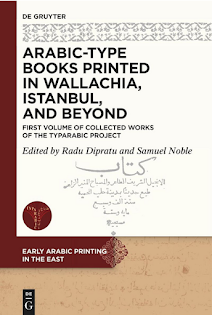
A New Open-Access Book on the Patriarch Sylvester of Antioch
Sylvester of Antioch:
Life and Achievements of an 18th-Century Christian Orthodox Patriarch
by Mihai Țipău
In 1724, Sylvester, a native of the island of Cyprus, was elected Patriarch of the Greek Orthodox Church of Antioch and All the East. For more than four decades, he endeavored to preserve the legacy of one of the earliest Christian Churches in the Levant. He faced major challenges because of the ever changing balance of power between the Latin Church and its missionaries, the Patriarchate of Constantinople, the French and English interests in the Levant, and the central and local Ottoman authorities. In his efforts to provide church books for the Arab Orthodox Christians, Sylvester was helped by rulers of the Romanian Principalities, Moldavia and Wallachia. He printed a number of books in Jassy and Bucharest and opened an Arabic press in Beirut. Alongside his patriarchal duties, Sylvester was also an accomplished icon painter. His works, in the Post-Byzantine Greek style of the 18th century, are preserved in Syrian and Lebanese churches, as well as elsewhere. Their study reveals just another aspect of his complex activity. The book presents for the first time in English the biography and achievements of Sylvester of Antioch, based on a wide range of contemporary Greek, Arabic and Romanian historical sources.
The book is available free for download here.
Monday, July 29, 2024
Asad Rustom on Patriarch Athanasius III Dabbas (II)
Translated from: Asad Rustum, Kanisat Madinat Allah Antakya al-'Uzma [The Church of the Great City of God Antioch], Jounieh: Editions St. Paul (1988), vol. 3, pp. 135-141
Athanasius and Euthymius
Patriarch Athanasius considered Euthymius to be excommunicated and announced this in the dioceses of the See of Antioch. He requested a firman from the sultan for the exile of Euthymius and a messenger of the sultan brought this firman to the governors. Euthymius, his nephew the priest Seraphim Tanas, his brother or cousin Mansur al-Sayfi, the priest Khalil Khabiyya, the priest Elias Faraoun, the priest Farajallah Nasr, and the priest Sulayman Salem were arrested, put in chains, and placed in the prison in the citadel of Sidon in preparation for their exile to Adana. A Greek bishop came bringing three orders from the sultan ordering that the see and its possessions be seized and all who recognize Rome's authority be punished. This Greek bishop visited Euthymius in prison and discussed with him his returning to the Church, but he refused. Euthymius was friends with the governor of Sidon, Uthman Pasha Abu Tawq, and he got in touch with him. He sent his men to discuss with the prisoners their paying a ransom for their liberty. When he received what he wanted from them, he testified to Euthymius' good condition and requested a pardon from the capital. He then released the prisoners after they had spent around three months in the prison. Euthymius feared that his fortunes might once again reverse after his friend Uthman Pasha was exiled in late 1722, so he requested a legal ruling from the qadi of Sidon affirming the inquest into his case and the issue of the pardon, which happened around June 19, 1723. Euthymius then made a pastoral tour, visiting Tyre, Sidon and Baalbek. He then went up to Damascus, where he was seized by exhaustion, since he was over eighty years old, and he died there in late November, 1723 and was buried in the hill cemetery. In 1926, some workers working at the cemetery came across Euthymius' gravestone and some monks took it secretly from the cemetery to the train station in Damascus. The police chief informed Patriarch Gregorius of blessed memory of this and he said, "They have more right to it than we do because he was the first Catholic bishop." So the gravestone was taken to Dayr al-Mukhallis.
Athanasius and Aleppo
After he gained sole possession of the patriarchate, Athanasius went to Wallachia and Moldavia to collect funds for the See of Antioch. He then returned to Constantinople and from there to Aleppo. He resided in that city for a time because he felt that its atmosphere was better for his health. Perhaps he wanted for his de facto center to be in the largest Orthodox environment. Perhaps he also disliked staying in Damascus due to the severe unrest among Orthodox circles inclined toward Rome.
The Aleppans had been demanding the consecration of a bishop for them since 1720, so Athanasius took the opportunity of the vacant see there and decided what would ensure love and peace. On July 27 of that year, he issued a patriarchal decree calling for the composition of a community council made up of twelve notables designating all income from tithes, candle sales, what is collected in the poor box, and two thirds of the income from liturgies and funerals to be handed over to the council which could dispense of it as it saw fit. It would insure the pateomai, the payment of judges, the monopoly of the churches, payment to the poor, the monasteries, the sacristans, etc. The patriarch designated income from betrothals and weddings, half the income from feasts, and a third of the income from liturgies and funerals to the bishop, in addition to the possessions of the epitrachelion. As for the nuriya tithe, it remained with the reigning patriarch, whoever he might be.
Athanasius spent twenty-one months in Damascus (1720-1721) and then he installed the priest Jirjis al-Balamandi as his vicar there and went to Aleppo, arriving on the Feast of the Apostles, June 29, 1721. Upon his arrival, the people demanded a bishop, desiring that he name the Shuwayrite Theodorus al-Hanawi. The patriarch was not pleased with this because Theodorus' inclination toward the Catholics was well-known. Then they asked for a bishop from among the people of their country, so he gave them a choice between the priest Jirjis al-Shadudi, the priest Niqula al-Sayegh, and the priest Gerasimus (Jirjis al-Balamandi). They chose Gerasimus and he came immediately, "because he was bitter with the people of Damascus because they hated his teacher" [quoted from the History of the Shuwayrite Order]. The patriarch consecrated Gerasimus as bishop of Aleppo in the evening after the Feast of the Nativity and issued the following statement:
"Blessing and grace. When necessity demanded the installation of a bishop for the city of Aleppo, since we were required to govern the Holy Apostolic See of Antioch, and since the way of the Church requires the election of a bishop to be with the consent of the patriarch and by the choice of the priests and the rest of the flock, we have seen that the opinion of the flock is divided to the point of causing disorder, and the matter of their choice has come down to four individuals and their consensus has not settled on any one. We have examined two out of the four and determined that they do not accept to advance to this lofty rank, citing its overwhelming duties. As for the third, it is unknown whether he is competent and it is not clear whether he would be pleased with its demands.
We asked God to make the choice and we have chosen for this rank and lordly task our spiritual son the priest Jirjis al-Balamandi, given that he is competent for it in terms of his biography, his good conduct and blamelessness. Therefore, we have issued this document to announce our election of the aforementioned and our pleasure with him, so that everyone in the flock who has relied on our decision may sign it to confirm what God has inspired in us since the community of Aleppo, as our special children, have requested that we reside among them to govern their affairs and to demonstrate our love for them so long as we remain alive. If necessity demands that we govern others, then we will go and perform this duty and then return to them, for we have seen that responding to their request with paternal love is necessary and acceptable, so we have responded to their desirable request as hoped for. They have accepted this agreement and decision in this manner, on the basis that this statement is confirmed with deeds and is relied upon."
After Gerasimus was elevated to the episcopacy, he refused to go to Damascus as patriarchal vicar and so there were hard feelings between them. Among the Aleppans there was a large segment that had strayed from Orthodoxy and when they saw what happened between Athanasius and Gerasimus they fled from the former on account of his efforts to combat them and rallied to Gerasimus and inclined him towards them. When the patriarch saw this, he sent Gerasimus away from Aleppo and excommunicated Abdallah Zakher. Gerasimus left Aleppo and lived for a time at Balamand Monastery, then the Monastery of Our Lady in Ra's Baalbek, then in Baalbek itself. Gerasimus remained exiled until July 1724, when the patriarch pardoned him and returned him to his see.
Athanasius and Damascus
Athanasius resolved to combat the Catholics in Damascus and publicly declared that. On December 14, 1722 he wrote to Leontius, the metropolitan of Hama and his vicar in Damascus, to bring together the priests, deacons and notables, to talk to them about what had happened, and to command them to hold firmly to the Orthodox traditions without addition or subtraction, and to write a report about this explaining the situation to the patriarch of Constantinople and all the metropolitans. He commanded Leontius to make the Damascenes understand that their patriarch follows the Eastern Church and the Seven Holy Councils and that he believes in everything they said, the canons they defined, and all the rituals, arrangements, fasts and prayers. If they accept this opinion and give their signatures to it, then he would continue as he was and continue his care for them. And if they do not accept, then Leontius can only inform the patriarch of this so that he may remove his hand and leave them "to work out their salvation." If they obey, then he would be pleased with them, but he binds the priest, Khalil Khabiyya, the priest Abdalmasih Zibal, the priest Yuhanna Khibiyya and the priest Niqula Sayur, and if they do not keep this patriarchal injunction, then they fall into excommunication by the word of the Lord, as do their partisans.
The Synod of Dayr al-Mukhallis
Euthymius Sayfi died on November 27 according to the Julian calendar, 1723. The Rum Catholic priests gathered at Dayr al-Mukhallis, along with important people and notables, and they discussed the issue of a successor who would take up leadership of the Rum Catholics. They asked the priest Seraphim, Euphymius' nephew, to succeed his uncle, but he refused because the Christians of Sidon were still discussing with Patriarch Athanasius about Seraphim's consecration as metropolitan of Sidon. Eyes turned to the priest Gabriel Finan, and he said, "This matter is not in my hands." They said to him, "Be silent and accept the rank and we will do our job." He accepted and those gathered petitioned the Emir Haydar, ruler of Mount Lebanon, to summon three bishops to consecrate Gabriel. "So the emir brought them three bishops who were under his rule: the metropolitan [Neophytus] of Beirut of the Byzantine rite, the Maronite bishop Elias, and the Armenian bishop Abram" [here Rustom is quoting Constantine Basha's History of the Melkite Community] and they consecrated Gabriel as bishop of Banyas and called him "Basil". Basil resided in Dayr al-Mukhallis, directing its affairs. On March 2, 1724, he wrote to the Propaganda Fide, explaining his situation requesting "dispensation from the Apostolic See" because Neophytus was not Catholic!
Ignatius, Metropolitan of Tyre and Sidon (1724)
Athanasius was not pleased with the consecration of Basil and he did not trust Seraphim because of his fierce impulse toward Catholicism and boldness in declaring it. He still hoped that matters could be resolved and the lost sheep could be returned to the flock. He took a moderate position in the consecration of a successor for Euthymius in Tyre and Sidon and agreed to the nomination of the priest Ignatius al-Bayruti. The latter was one of Euthymius' disciples and was his representative during his absence, but he was "humble and gentle." Athanasius summoned him to Aleppo and he asked Metropolitan Neophytus of Beirut and Metropolitan Neophytus of Saydnaya to handle the matter of his consecration, permitting them to perform it themselves due to the lack of a third bishop. He said in his decree that he was acting according to Apostolic Canon 20 and Canon 27 of Saint Clement, disciple of Saint Peter.
The Death of Athanasius (1724)
Athanasius grew old, going beyond seventy-five years. He suffered from a malady of the bladder and died on July 24, 1724. He was buried in a grave prepared for him in the church of Aleppo. The priest Mikhail Breik states that he was poisoned. It is stated in the history of the Shuwayrite Monks that he celebrated the divine liturgy early in the month of July and said at the end, "Someone [i.e., Abdallah Zakher] has written a book against our council, so let them and those who read their book be excommunicated," and as he was removing his vestments he was struck with a pain and became bedridden.
In Germanus Farhat's History of Heresies, he states that when the hour of the patriarch's death drew close, the Jesuit priest Fromage came to him and started talking about the mystery of confession, but he refused to confess with him and said "I have already confessed." Germanus adds that the patriarch confessed to the Orthodox priest Butrus al-Ashqar, abbot of the Monastery of Saint George Humayra and that he died Orthodox. In the history of the Shuwayrite Monks it says that Athanasius remained insistent "on his schism" until death. Fr Joseph de Reilly, abbot of the Capuchin monastery in Aleppo, states that on July 27 according to the Western calendar he went to visit Athanasius, patriarch of the Rum and that he did not hide from him his fear of the inevitable drawing near, and he renounced the decisions of the Council of Constantinople, that he only knew one church, the Church of Rome, that he would die in this faith and belief, apart from the customs of the ritual that do not affect the religion, that he accepted all the ecumenical councils, especially the Council of Florence, and that he pardoned Abdallah Zakher before his death. The anonymous author of the History of the Birth of the Community known as Rum Catholic, which was composed around 1820, states, "The Catholics claim that Athanasius died in their confession and this statement is widespread among them and their partisans, since it is well known that it is the custom of those people that if one of them or of us [i.e., the Orthodox] who is known for piety and goodness dies, they say that he died in their belief, even if that is falsehood and slander, and that there is no sin or shame for them in this!"
We think that the testimony of Metropolitan Germanus Farhat is the most trustworthy. He was a Maronite bishop subject to Rome and a friend and companion of Athanasius who had no ulterior motive in what he recounted and the historian of the Shuwayrite Order does not contradict him about this. There is no middle way in this matter, what is true in mathematics is true here.