Showing posts with label Athansasius III Dabbas. Show all posts

Monday, July 29, 2024

Asad Rustom on the Election of the Catholic Patriarch Cyril Tanas

Translated from: Asad Rustum, Kanisat Madinat Allah Antakya al-'Uzma [The Church of the Great City of God Antioch], Jounieh: Editions St. Paul (1988), vol. 3, pp. 1141-143

While the main modern Orthodox treatment of the subject, Rustom's account is less detailed than one might hope and largely reliant on Catholic secondary sources, particularly Constantine Basha's history of the Salvatorian Order. For purposes of comparison, it is useful to take a look at the following modern Catholic sources:

Wilhelm de Vries

Dom C.L. Spiessens, who concludes that Cyril Tanas was never validly consecrated as a bishop.

Serge Descy, who somewhat more cautiously concurs with Spiessens.


The Catholic Patriarch Cyril Tanas (1724)

After the death of Athanasius IV [in modern reckoning, III], those who had broken away grew in strength and took the opportunity to strengthen their position in the See and reinforce themselves under the leadership of Seraphim Tanas, nephew of Euthymius Sayfi. Seraphim was born in Damascus around 1680 and was raised by his uncle Euthymius. He traveled to Rome in 1702 to receive education there. He then returned to Sidon, the center of his uncle's diocese, in 1710. His uncle ordained him to the priesthood and worked to guide him. He traveled around preaching and advocating for Rome in the dioceses of the See of Antioch. A group of people in Acre nominated him as their bishop, but the patriarch of Jerusalem was opposed and he was not consecrated. Then the people of the Diocese of Tyre and Sidon nominated him to succeed his uncle. He went to Aleppo bearing the petitions for his nomination, seeking to be consecrated by the Patriarch Athanasius. The latter refused to consecrate him since his submission to Rome was widely-known and he was openly declaring the necessity for union. When Athanasius died, the separatists in Damascus, numbering 328, decided to nominate Seraphim for the patriarchal see and they wrote a petition, signed it and brought it to the temporal authorities in Damascus. They said:

"Petition after the necessary supplication, in the hands of the guardians of blessings and masters of sword and pen, the sublime State, may God almighty make its rule endure forever and extend it through victory with the support of their servants and subjects, the dhimmi Christians living in the God-protected city of Damascus of the Rum community, who pray for this sublime State to remain forever, whose names are signed below, that they have accepted, are pleased with, and have chosen the teacher Cyril to be patriarch over them, to rule, to be obeyed, governing them according to the accepted canons and directing their affairs with recognized governance according to the precedent of previous patriarchs in the manner agreed among them. He is therefore worthy to lead them and of the patriarchate that they require. They request that by its mercies and kindnesses the sublime State will install this gentleman in the Patriarchate of Antioch in Damascus, granting the request of the elites and the common people. May God strengthen the foundations of this sublime State over the course of the nights and days, until the day and hour of the Resurrection and the supplication is lasting."

They presented the petition to the pasha and delegated him to request a berat from the sultan for this, paying him what needed to be paid. Then the bishops of the Church of Antioch discussed the matter of the consecration. The bishops refused. None of them went to Damascus, apart from Neophytus, the bishop of Saydnaya. The Damascenes summoned Basil Finan from Dayr al-Mukhallis. Upon his arrival, he consecrated, along with Neophytus, the priest Euthymius Fadel as bishop of Furzul so that there could be three bishops to consecrate the patriarch. There is no hiding the departure from holy tradition in this act. The episcopacy of Basil was fundamentally uncanonical due to the interference of the Emir Haydar in it [about which, see here], his pressuring and forcibly summoning Metropolitan Neophytus of Beirut, and the participation of a Maronite bishop and an Armenian bishop in the consecration. It is also an obvious violation of the traditions that Neophytus of Saydnaya and Basilius of Dayr al-Mukhallis proceeded to consecrate a third bishop unilaterally. The consecration of Ignatius of Tyre and Sidon cannot be regarded as such a deviation because Patriarch Athanasius had agreed to his consecration with the participation of the two Neophyti. But where is the patriarch who agreed to the consecration of Euthymius for Furzul?

Euthymius was consecrated on September 14 as bishop of Furzul. On the twentieth of the same month, the three bishops consecrated the priest Seraphim as bishop with the name Cyril, then installed him as patriarch. Rome did not reject him on account of this deviation and departure from the holy apostolic canons and Pope Benedict XII issued an apostolic berat on March 15, 1729 in which he confirmed Cyril Tanas as patriarch of Antioch, sending him a pallium after having placed it on the relics of Saint Peter as a symbol of deriving authority from him.

Cyril Tanas laid claim to the patriarchal center in Damascus and was seated on the throne of the cathedral, "lifting up verses of thanksgiving to God for this. It was then heard for the first time 'I believe that the Roman Supreme Pontif is the vicar of Christ the Lord and head of the entire Church and I believe that the Holy Spirit proceeds from the Father and the Son.'" [This quotation is from a Capuchin friar writing from Damascus at that time]. In the history of Mikhail Breik, it says "then they declared the five things [which distinguish Catholicism from Orthodoxy], the Franks entered the church, the community of the Rum was humiliated, debates proliferated, the strife intensified, injustices and loss proliferated, and a group of Muslim servants of the ruler entered the sanctuary with smoking torches while the patriarch was performing the liturgy and they talked with him..."

Cyril consecrated the priest Methodius al-Halabi as bishop for the patriarchal cell and entrusted him with management of the diocese of Damascus for his help in the affair.

Asad Rustom on Patriarch Athanasius III Dabbas (II)

Translated from: Asad Rustum, Kanisat Madinat Allah Antakya al-'Uzma [The Church of the Great City of God Antioch], Jounieh: Editions St. Paul (1988), vol. 3, pp. 135-141

 Part I here.

Athanasius and Euthymius

Patriarch Athanasius considered Euthymius to be excommunicated and announced this in the dioceses of the See of Antioch. He requested a firman from the sultan for the exile of Euthymius and a messenger of the sultan brought this firman to the governors. Euthymius, his nephew the priest Seraphim Tanas, his brother or cousin Mansur al-Sayfi, the priest Khalil Khabiyya, the priest Elias Faraoun, the priest Farajallah Nasr, and the priest Sulayman Salem were arrested, put in chains, and placed in the prison in the citadel of Sidon in preparation for their exile to Adana. A Greek bishop came bringing three orders from the sultan ordering that the see and its possessions be seized and all who recognize Rome's authority be punished. This Greek bishop visited Euthymius in prison and discussed with him his returning to the Church, but he refused. Euthymius was friends with the governor of Sidon, Uthman Pasha Abu Tawq, and he got in touch with him. He sent his men to discuss with the prisoners their paying a ransom for their liberty. When he received what he wanted from them, he testified to Euthymius' good condition and requested a pardon from the capital. He then released the prisoners after they had spent around three months in the prison. Euthymius feared that his fortunes might once again reverse after his friend Uthman Pasha was exiled in late 1722, so he requested a legal ruling from the qadi of Sidon affirming the inquest into his case and the issue of the pardon, which happened around June 19, 1723. Euthymius then made a pastoral tour, visiting Tyre, Sidon and Baalbek. He then went up to Damascus, where he was seized by exhaustion, since he was over eighty years old, and he died there in late November, 1723 and was buried in the hill cemetery. In 1926, some workers working at the cemetery came across Euthymius' gravestone and some monks took it secretly from the cemetery to the train station in Damascus. The police chief informed Patriarch Gregorius of blessed memory of this and he said, "They have more right to it than we do because he was the first Catholic bishop." So the gravestone was taken to Dayr al-Mukhallis.

Athanasius and Aleppo

After he gained sole possession of the patriarchate, Athanasius went to Wallachia and Moldavia to collect funds for the See of Antioch. He then returned to Constantinople and from there to Aleppo. He resided in that city for a time because he felt that its atmosphere was better for his health. Perhaps he wanted for his de facto center to be in the largest Orthodox environment. Perhaps he also disliked staying in Damascus due to the severe unrest among Orthodox circles inclined toward Rome.

The Aleppans had been demanding the consecration of a bishop for them since 1720, so Athanasius took the opportunity of the vacant see there and decided what would ensure love and peace. On July 27 of that year, he issued a patriarchal decree calling for the composition of a community council made up of twelve notables designating all income from tithes, candle sales, what is collected in the poor box, and two thirds of the income from liturgies and funerals to be handed over to the council which could dispense of it as it saw fit. It would insure the pateomai, the payment of judges, the monopoly of the churches, payment to the poor, the monasteries, the sacristans, etc. The patriarch designated income from betrothals and weddings, half the income from feasts, and a third of the income from liturgies and funerals to the bishop, in addition to the possessions of the epitrachelion. As for the nuriya tithe, it remained with the reigning patriarch, whoever he might be.

Athanasius spent twenty-one months in Damascus (1720-1721) and then he installed the priest Jirjis al-Balamandi as his vicar there and went to Aleppo, arriving on the Feast of the Apostles, June 29, 1721. Upon his arrival, the people demanded a bishop, desiring that he name the Shuwayrite Theodorus al-Hanawi. The patriarch was not pleased with this because Theodorus' inclination toward the Catholics was well-known. Then they asked for a bishop from among the people of their country, so he gave them a choice between the priest Jirjis al-Shadudi, the priest Niqula al-Sayegh, and the priest Gerasimus (Jirjis al-Balamandi). They chose Gerasimus and he came immediately, "because he was bitter with the people of Damascus because they hated his teacher" [quoted from the History of the Shuwayrite Order]. The patriarch consecrated Gerasimus as bishop of Aleppo in the evening after the Feast of the Nativity and issued the following statement:

"Blessing and grace. When necessity demanded the installation of a bishop for the city of Aleppo, since we were required to govern the Holy Apostolic See of Antioch, and since the way of the Church requires the election of a bishop to be with the consent of the patriarch and by the choice of the priests and the rest of the flock, we have seen that the opinion of the flock is divided to the point of causing disorder, and the matter of their choice has come down to four individuals and their consensus has not settled on any one. We have examined two out of the four and determined that they do not accept to advance to this lofty rank, citing its overwhelming duties. As for the third, it is unknown whether he is competent and it is not clear whether he would be pleased with its demands.

We asked God to make the choice and we have chosen for this rank and lordly task our spiritual son the priest Jirjis al-Balamandi, given that he is competent for it in terms of his biography, his good conduct and blamelessness. Therefore, we have issued this document to announce our election of the aforementioned and our pleasure with him, so that everyone in the flock who has relied on our decision may sign it to confirm what God has inspired in us since the community of Aleppo, as our special children, have requested that we reside among them to govern their affairs and to demonstrate our love for them so long as we remain alive. If necessity demands that we govern others, then we will go and perform this duty and then return to them, for we have seen that responding to their request with paternal love is necessary and acceptable, so we have responded to their desirable request as hoped for. They have accepted this agreement and decision in this manner, on the basis that this statement is confirmed with deeds and is relied upon."

After Gerasimus was elevated to the episcopacy, he refused to go to Damascus as patriarchal vicar and so there were hard feelings between them. Among the Aleppans there was a large segment that had strayed from Orthodoxy and when they saw what happened between Athanasius and Gerasimus they fled from the former on account of his efforts to combat them and rallied to Gerasimus and inclined him towards them. When the patriarch saw this, he sent Gerasimus away from Aleppo and excommunicated Abdallah Zakher. Gerasimus left Aleppo and lived for a time at Balamand Monastery, then the Monastery of Our Lady in Ra's Baalbek, then in Baalbek itself. Gerasimus remained exiled until July 1724, when the patriarch pardoned him and returned him to his see.

Athanasius and Damascus

Athanasius resolved to combat the Catholics in Damascus and publicly declared that. On December 14, 1722 he wrote to Leontius, the metropolitan of Hama and his vicar in Damascus, to bring together the priests, deacons and notables, to talk to them about what had happened, and to command them to hold firmly to the Orthodox traditions without addition or subtraction, and to write a report about this explaining the situation to the patriarch of Constantinople and all the metropolitans. He commanded Leontius to make the Damascenes understand that their patriarch follows the Eastern Church and the Seven Holy Councils and that he believes in everything they said, the canons they defined, and all the rituals, arrangements, fasts and prayers. If they accept this opinion and give their signatures to it, then he would continue as he was and continue his care for them. And if they do not accept, then Leontius can only inform the patriarch of this so that he may remove his hand and leave them "to work out their salvation." If they obey, then he would be pleased with them, but he binds the priest, Khalil Khabiyya, the priest Abdalmasih Zibal, the priest Yuhanna Khibiyya and the priest Niqula Sayur, and if they do not keep this patriarchal injunction, then they fall into excommunication by the word of the Lord, as do their partisans.

The Synod of Dayr al-Mukhallis

Euthymius Sayfi died on November 27 according to the Julian calendar, 1723. The Rum Catholic priests gathered at Dayr al-Mukhallis, along with important people and notables, and they discussed the issue of a successor who would take up leadership of the Rum Catholics. They asked the priest Seraphim, Euphymius' nephew, to succeed his uncle, but he refused because the Christians of Sidon were still discussing with Patriarch Athanasius about Seraphim's consecration as metropolitan of Sidon. Eyes turned to the priest Gabriel Finan, and he said, "This matter is not in my hands." They said to him, "Be silent and accept the rank and we will do our job." He accepted and those gathered petitioned the Emir Haydar, ruler of Mount Lebanon, to summon three bishops to consecrate Gabriel. "So the emir brought them three bishops who were under his rule: the metropolitan [Neophytus] of Beirut of the Byzantine rite, the Maronite bishop Elias, and the Armenian bishop Abram" [here Rustom is quoting Constantine Basha's History of the Melkite Community] and they consecrated Gabriel as bishop of Banyas and called him "Basil". Basil resided in Dayr al-Mukhallis, directing its affairs. On March 2, 1724, he wrote to the Propaganda Fide, explaining his situation requesting "dispensation from the Apostolic See" because Neophytus was not Catholic!

Ignatius, Metropolitan of Tyre and Sidon (1724)

Athanasius was not pleased with the consecration of Basil and he did not trust Seraphim because of his fierce impulse toward Catholicism and boldness in declaring it. He still hoped that matters could be resolved and the lost sheep could be returned to the flock. He took a moderate position in the consecration of a successor for Euthymius in Tyre and Sidon and agreed to the nomination of the priest Ignatius al-Bayruti. The latter was one of Euthymius' disciples and was his representative during his absence, but he was "humble and gentle." Athanasius summoned him to Aleppo and he asked Metropolitan Neophytus of Beirut and Metropolitan Neophytus of Saydnaya to handle the matter of his consecration, permitting them to perform it themselves due to the lack of a third bishop. He said in his decree that he was acting according to Apostolic Canon 20 and Canon 27 of Saint Clement, disciple of Saint Peter.

The Death of Athanasius (1724)

Athanasius grew old, going beyond seventy-five years. He suffered from a malady of the bladder and died on July 24, 1724. He was buried in a grave prepared for him in the church of Aleppo. The priest Mikhail Breik states that he was poisoned. It is stated in the history of the Shuwayrite Monks that he celebrated the divine liturgy early in the month of July and said at the end, "Someone [i.e., Abdallah Zakher] has written a book against our council, so let them and those who read their book be excommunicated," and as he was removing his vestments he was struck with a pain and became bedridden.

In Germanus Farhat's History of Heresies, he states that when the hour of the patriarch's death drew close, the Jesuit priest Fromage came to him and started talking about the mystery of confession, but he refused to confess with him and said "I have already confessed." Germanus adds that the patriarch confessed to the Orthodox priest Butrus al-Ashqar, abbot of the Monastery of Saint George Humayra and that he died Orthodox. In the history of the Shuwayrite Monks it says that Athanasius remained insistent "on his schism" until death. Fr Joseph de Reilly, abbot of the Capuchin monastery in Aleppo, states that on July 27 according to the Western calendar he went to visit Athanasius, patriarch of the Rum and that he did not hide from him his fear of the inevitable drawing near, and he renounced the decisions of the Council of Constantinople, that he only knew one church, the Church of Rome, that he would die in this faith and belief, apart from the customs of the ritual that do not affect the religion, that he accepted all the ecumenical councils, especially the Council of Florence, and that he pardoned Abdallah Zakher before his death. The anonymous author of the History of the Birth of the Community known as Rum Catholic, which was composed around 1820, states, "The Catholics claim that Athanasius died in their confession and this statement is widespread among them and their partisans, since it is well known that it is the custom of those people that if one of them or of us [i.e., the Orthodox] who is known for piety and goodness dies, they say that he died in their belief, even if that is falsehood and slander, and that there is no sin or shame for them in this!"

We think that the testimony of Metropolitan Germanus Farhat is the most trustworthy. He was a Maronite bishop subject to Rome and a friend and companion of Athanasius who had no ulterior motive in what he recounted and the historian of the Shuwayrite Order does not contradict him about this. There is no middle way in this matter, what is true in mathematics is true here.

Tuesday, July 9, 2024

Asad Rustom on Patriarch Athanasius III Dabbas (I)

Translated from: Asad Rustum, Kanisat Madinat Allah Antakya al-'Uzma [The Church of the Great City of God Antioch], Jounieh: Editions St. Paul (1988), vol. 3, pp. 130-135.

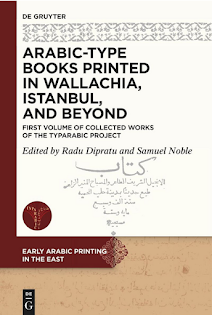
 For more information about Athanasius Dabbas' printing activities in Romania, see this excellent open-access monograph, published this year.


Athanasius IV (1720) [III in modern reckoning]

 Cyril III grew old, he developed an ulcer on his leg and the ulcer burst. As his death approached, he conveyed his will. The priest Abd al-Masih, who was one of those who confessed Catholicism, came to him and asked him if he wanted to confess. The patriarch responded, "What have I done? I have not killed. I have not fornicated. I have not stolen. Read a prayer." [For this Rustom cites a letter by Euthymius Sayfi to Pope Clement XI, which apparently was meant to explain why Cyril refused Catholic last rites.] On Wednesday, January 5, 1720, God chose for him to meet his fate, his soul departed and he was buried on Theophany in the tomb of the patriarchs on the Hill of St George. "The period of his reign was forty-seven years, six months, and four days." [This text is inscribed on a wall at the cathedral in Damascus.]

Euthymius was in Damascus at that time. His supporters gathered around him and wanted to declare him patriarch, seeking the support of Euthymius' friend, Uthman Pasha Abu Tawq. They intended to seize the patriarchate by force, but the Latin missionaries Frs Thomas de Campaya and Pierre Fromage opposed them because he was excommunicated by the patriarchs and that he had changed the liturgy and services and abolished the order of the Church, explaining that "He wants to abolish the hot water from the liturgy and require you to eat fish. He feeds meat to your monks in order to denigrate your Church!" Instead, they supported Athanasius because he had previously been installed as patriarch. Euthymius had requested five hundred qurush that he had paid Cyril on the occasion of his having consecrated a metropolitan for Tyre and Sidon, and he was given one hundred gold pieces, sixteen church books and other things. Then Euthymius went to the church and proclaimed the name of Athanasius, saying, "Be at ease in heart and mind."

As for Athanasius, after the reconciliation that took place in 1694 he settled in Aleppo and managed his flock in the best way. "He forbade them from what is not allowed and confirmed among them what should be confirmed, cutting off the causes of evil and establishing the causes of good." The Christians of various confessions loved him and were inclined toward him "because he had a wise and abundant intellect" [both quotes are from the contemporary Maronite metropolitan of Aleppo, Germanus Farhat]. He poured over the books of the fathers, conforming himself to the best path. He was in contact with Constantinople and traveled to Wallachia and Moldavia seeking alms. When Cyril died, a large group of the Christians of Damascus called for Athanasius as patriarch, writing about this to the notables of the community in Aleppo. Athanasius was absent from there, traveling in Wallachia, and Ni'ma ibn al-Khuri Tuma al-Halabi replied in the name of the notables of Aleppo with an ambiguous letter, which he included in his book Rakib al-Tariq li-man Yarda bi-Taqlid al-Talfiq. Here is the most important part:

"With regard to your letters sent by our hand, we send them to His Holiness along with the letters for Islambul. In the case that they arrive, we have taken the care that we should and we have announced the publication of particular and general letters and have put them all in one envelope [...] We have confirmed to His Holiness that he is to be present in Islambul at the appointed time to conduct his business as he desires."

The Council of Constantinople (1722)

Athanasius returned from Wallachia and reached Damascus in early August 1720. Cyril had left all his belongings to the Patriarchal See and when Athanasius settled the matter and found that most of them had disappeared, he was greatly enraged. His rage only increased when he became aware of the activity of the Frankish monks and their intervention into the affairs of the Church.

Since Athanasius' material means did not help him to combat the Frankish monks using their weapons, he raised the matter with the Ecumenical Patriarchate. He then traveled to Constantinople himself and took great pains to hold a council to examine what must be done to deal with this issue. This council was held in late 1722 in Constantinople, presided by Ecumenical Patriarch Jeremiah and with the participation of Patriarchs Athanasius of Antioch and Chrysanthus of Jerusalem and twelve metropolitans. This council condemned non-Orthodox teachings, especially those pertaining to primacy, infallibility, procession from the Son, azymes, the fire of Purgatory, the beatitude of the saints, strangled meat, fasting on Saturday, and the withholding of chrismation and communion from children. The acts of this council were issued in Greek and Arabic and published in Lebanon, Syria and Palestine. Assemani mentions this in part three of the Bibliotheca Orientalis and Vendotis in the addenda to the ecclesiastical history of Meletius.

The Abbreviation of the Apostles' Fast

Cyril III worked with high Orthodox authorities to shorten the Apostles' Fast. When Athanasius acceded to the apostolic throne, he received a synodicon authorizing the lifting of this burden. He issued a pastoral encyclical in which the Apostles' Fast was made to be twelve days according to the number of the Twelve Apostles. This was "in order that he who fasts not judge he who does not fast and he who does not eat not judge he who eats." He explained the five reasons that necessitated this abbreviation: 1) Those who did this fast did so with grumbling. 2) This grumbling led some to blasphemy. 3) Some of the faithful secretly broke the fast. 4) Some where shamelessly eating animal products. 5) Many people in villages and the countryside were leaving Christianity to join the nations [i.e., converting to Islam] because "the season of the year in which the fast falls is devoid of vegetables, fruits and fasting foods, but abundant in milk, yogurt, cheese and eggs, and the people in the countryside do not have any other foods than these. Thus their children leave them and join their non-Christian neighbors and no Christians remain in some villages."


The Liturgikon and the Horologion

While still "former patriarch", Athanasius was concerned with the liturgy and in 1701 in Bucharest he printed The Book of the Three Liturgies in parallel Greek and Arabic columns. For the Greek text, he relied on what had previously been printed in Venice and for the Arabic text he used that of Meletius Karma. The book was of a medium size and 252 pages. On its frontispiece it states the following:

"Book of the Three Divine Liturgies along with other things necessary for Orthodox prayers. Now newly printed in the Greek and Arabic languages through the care and supervision of His Beatitude Kyriokyr Athanasius, former Patriarch of Antioch, at the expense of the Most Glorious Lord, ruler of all the countries of Hungrovlachia, Kyr Kyr Ioan Constantin Basarab, the honorable voivod, under the episcopacy of His Beatitude Theodosius of the aforementioned countries, at the Monastery of the Theotokos, called "Snagov" in the Christian year 1701, by the Hieromonk Anthim, Georgian by origin."

In 1702, this same press published the Horologion in large Arabic script in red and black ink in around seven hundred pages. The troparia and kontakia for major feasts and the feasts of Pentecost and the Triodion are printed in Greek and Arabic in facing columns.

The Rock of Scandal

Athanasius decided to provide the Orthodox with something that would confirm their faith and make it possible for them to respond to the Frankish monks and their followers, so he translated the book of Elias Meniates into Arabic. He entitled it Sakhrat al-Shakk and published it in a printed edition in 1721, distributing it freely to members of the community. In this book, the origin and causes of the schism, the separation of the Western Church from the East, and the major differences between them is explained. This activity provoked Abdallah Zakher, and he responded in a book he entitled al-Tafnid lil-Majma' al-'Anid, which was also abridged. The Jesuit fathers printed it later in Beirut, in 1865. Later, the priest Niqula Sayegh composed a book in defense of Catholicism entitled al-Hisn al-'Azim muqabil al-Majma' al-Athim, of which there are two copies in Dayr al-Mukhallis.

The History of the Patriarchs of Antioch

Athanasius composed a history of the patriarchs of Antioch from the time of the Apostle Peter until the year 1702 in Greek. It was translated into Latin and published in Vienna. He translated a catechism and the Book of the Salvation of the Sage and Ruin of the Sinful World and wrote about the life of Saint John Christodoulos, abbot of the Monastery of the Apostle John the Theologian on Patmos.